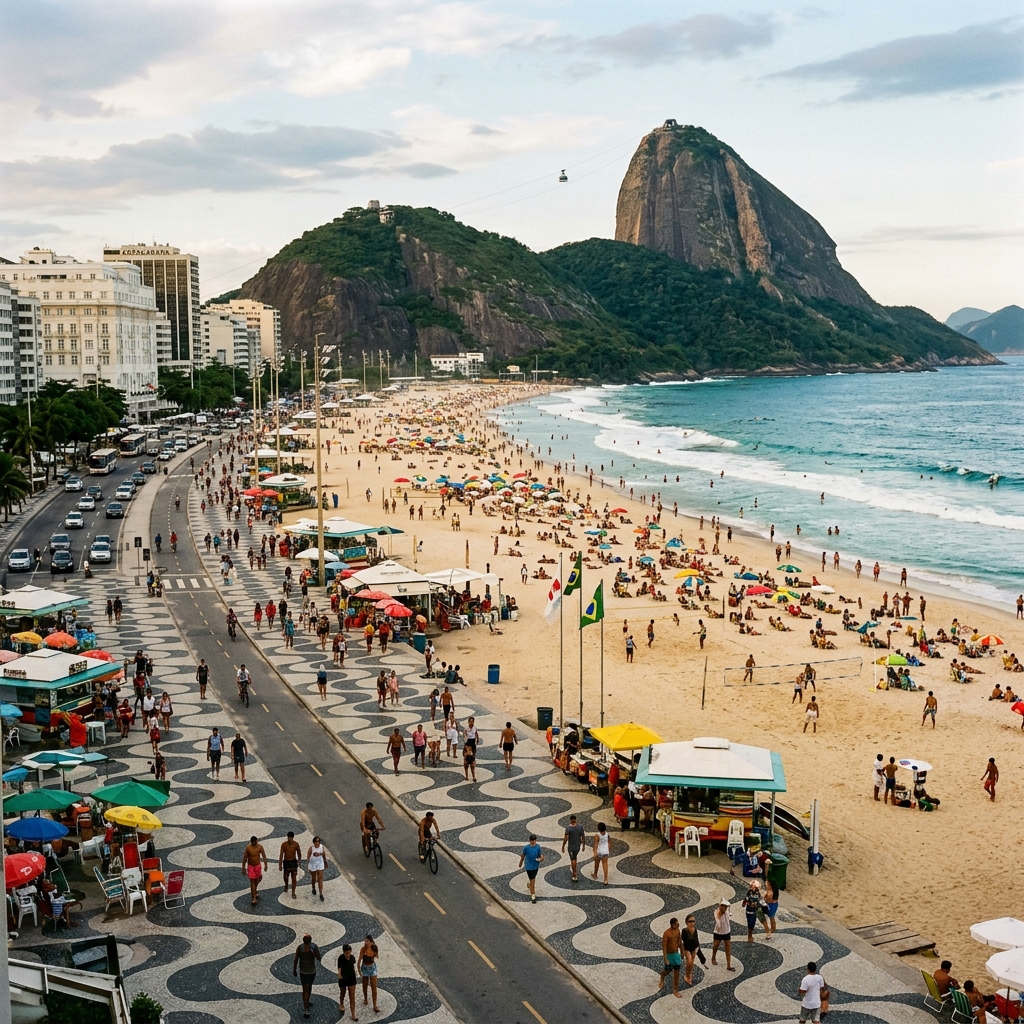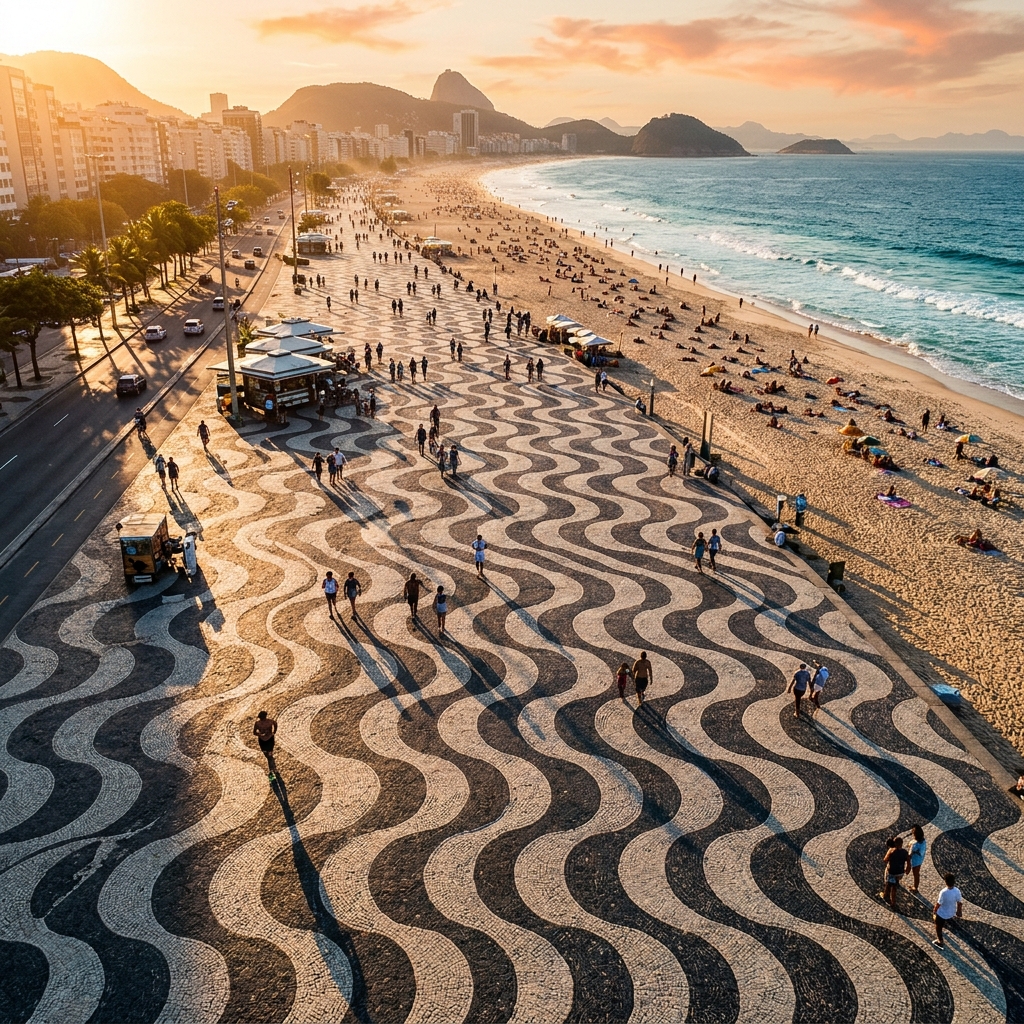
Copacabana's iconic Portuguese stone waves are inspired by the pavement of Praça do Rossio in Lisbon.
It's almost impossible to think of Rio de Janeiro without immediately recalling the iconic black and white Portuguese stone waves of the Copacabana boardwalk. They are the city's true fingerprint, but the origin of this charming design goes back across the Atlantic Ocean.
The original design was inspired by the historic pavement of Praça do Rossio (Dom Pedro IV Square) in the heart of Lisbon. There, the wavy pattern was created in the 19th century to represent the turbulent meeting of the Tagus River's fresh waters with the Atlantic Ocean. Charmed by the aesthetics, Rio's Mayor Pereira Passos brought the idea and Portuguese pavers to the city's waterfront in the early 20th century.
However, the grand and continuous version we know today is due to the genius of the Brazilian landscape architect Roberto Burle Marx. In the 1970s, during beach widening works, he redesigned the boardwalk, enlarging the waves and giving them the monumental proportion and fluidity that makes Copacabana the world's most famous promenade.
Cariocando Tip: Look closely at the Copacabana boardwalk, and then walk to Ipanema. You'll notice that each beach features a totally different and unique geometric pattern of Portuguese stones. A great detail to explore photographically!