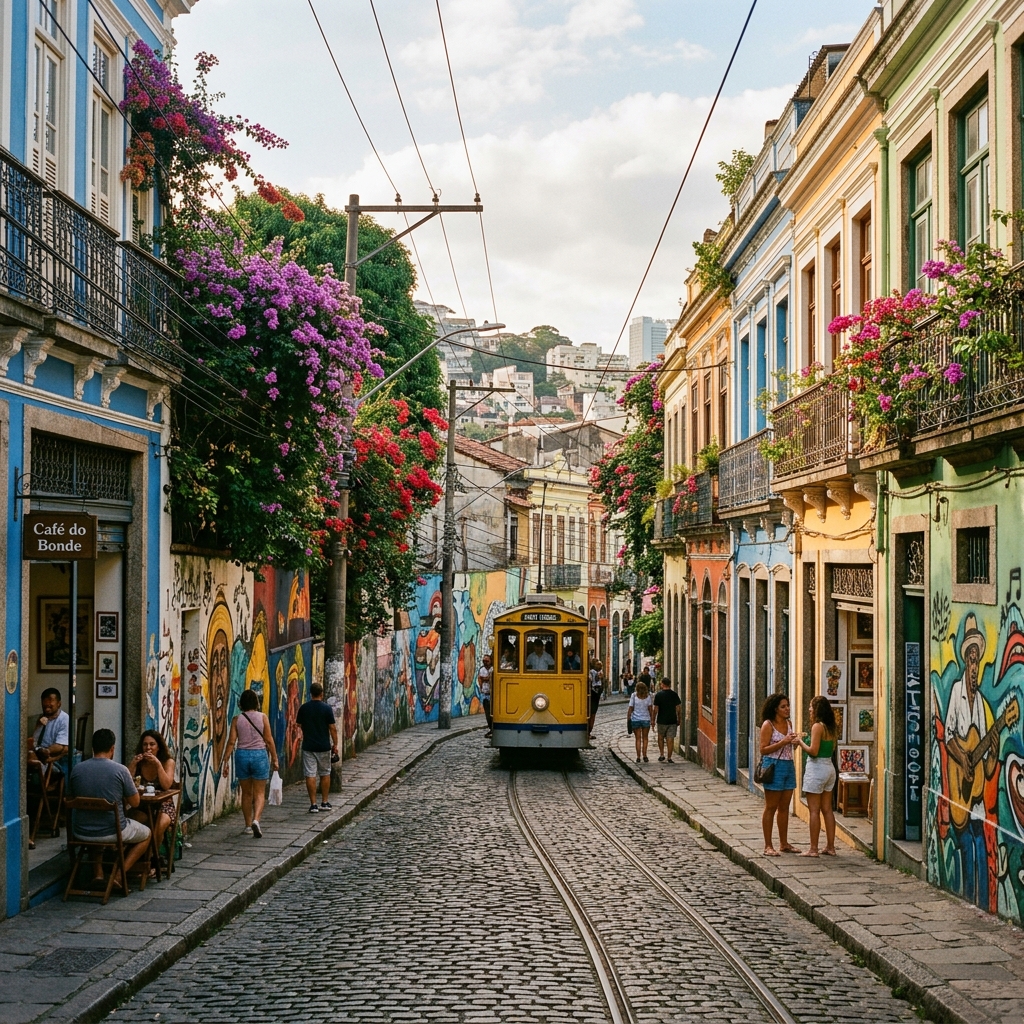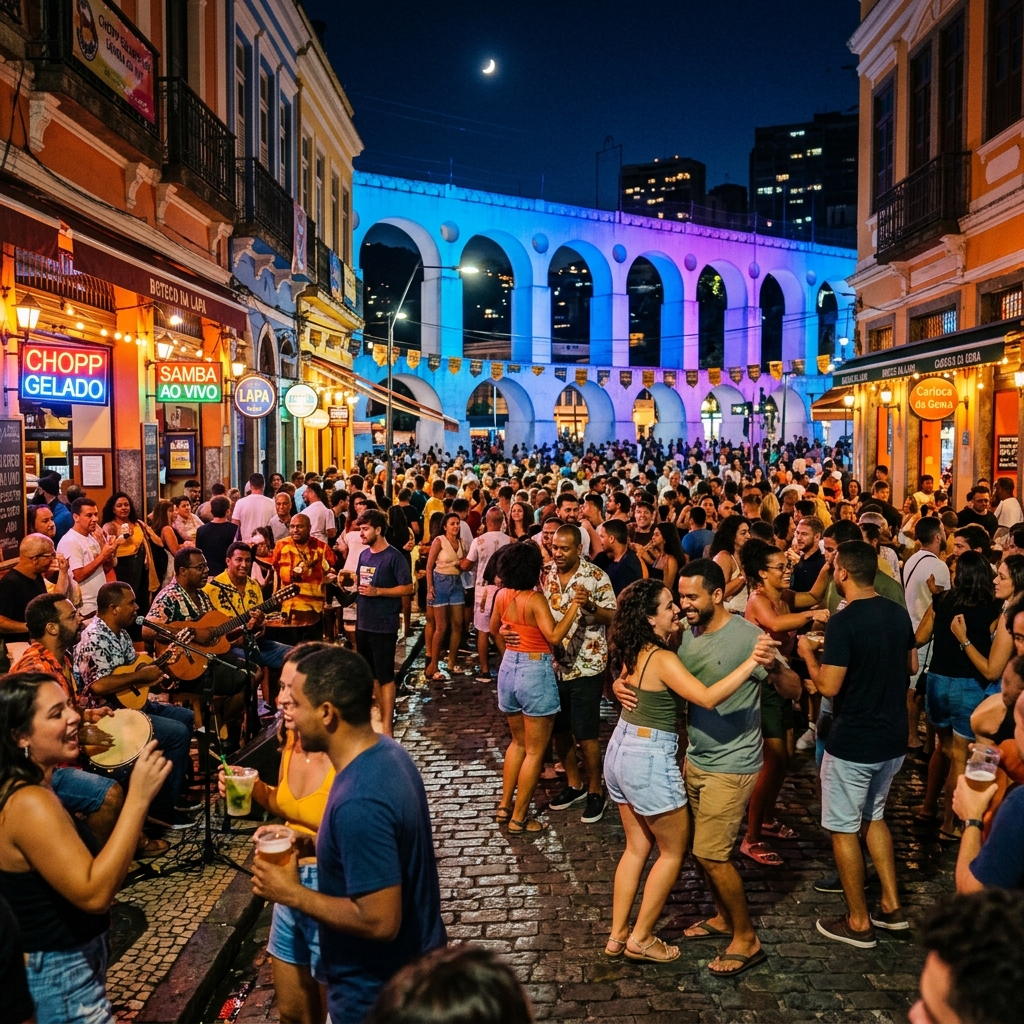
The stone staircase where samba was born hosts live rodas every Monday and Friday. Beer from coolers, open-air tambourines and Rio's rawest Afro-Brazilian heritage.
Pedra do Sal is not just a stone staircase in downtown Rio — it's the ground where Afro-Brazilian culture took root and from which samba spread to the world.
The Historical Legacy
In the Saúde neighborhood, a region known as "Little Africa," enslaved people arriving at the Cais do Valongo wharf in the 19th century carried salt stones from the port to warehouses. The Black communities that formed there — led by figures like Tia Ciata, Tia Bebiana and João Alabá — created Rio's first samba rodas. In 1917, "Pelo Telefone" by Donga, born from these circles, became the first officially recorded samba. Pedra do Sal was designated cultural heritage in 1984.
Today, the staircase keeps the tradition alive. On Mondays, the Grupo Semente samba roda (led by Pedro Miranda and Teresa Cristina) draws hundreds who sing the repertoire of Cartola, Noel Rosa and Nelson Cavaquinho by heart. On Fridays, the mood shifts to forró pé-de-serra and samba de gafieira. There's no formal stage: musicians play on the staircase, the crowd circles around, and the city vanishes.
What to Expect
Beer is sold from coolers by street vendors (R$ 5 to R$ 8 per can). There's no restaurant or restroom — neighboring bars on Rua São Francisco da Prainha help out. The ground is uneven cobblestone; sandals work better than heels. The roda starts around 7 PM and runs until 11 PM on Mondays, extending later on Fridays. No cover charge.
How to Get There
VLT light rail: Parada dos Navios station (3-minute walk). Metro: Uruguaiana station (Line 1), then 15-minute walk along Rua Camerino. Uber: ask to be dropped at Rua Argemiro Bulcão — Pedra do Sal is at the junction with Largo João da Baiana.
When to Go
Monday is the consecrated night for roots samba. Friday for forró and upbeat samba. Arrive by 6:30 PM to get a spot near the musicians. In summer months (December to March), the crowd triples — go earlier. In winter, evenings are smaller and more intimate.
Who Is This For
Travelers interested in Afro-Brazilian history, live music lovers who prefer the street to a nightclub, documentary photographers, and anyone who wants to feel samba in its purest form — no costumes, no tickets, no mediation.
Understand the full history of the rhythm in Samba: The History of the Rhythm that Defines Brazil.